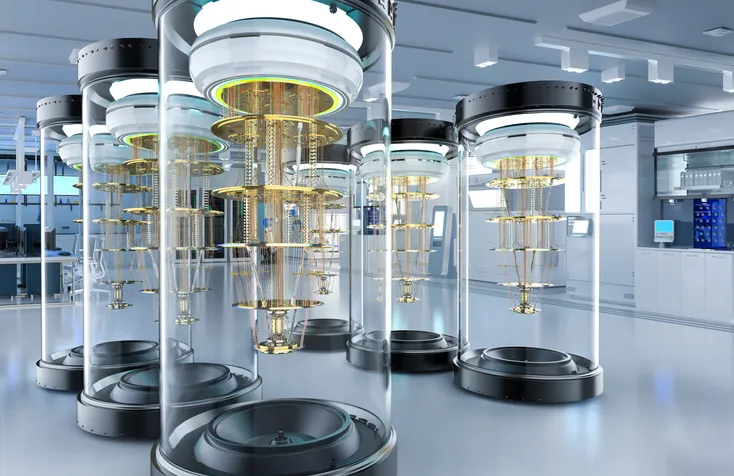
Quantum computing could mark the next revolution in tech. Giants in the industry such as Google and IBM are making big investments in these next-gen computers, and industry is not alone. In June, the U.S. Department of Energy announced its Quantum Genesis Initiative, which aims to develop and deploy fully “scientifically relevant quantum computing capability for research and development by 2028." In July the U.S. National Science Foundation (NSF) announced Project Triad, an initiative that seeks to unify “three domains of quantum technology — sensors, computers and networks — in a unified, functional system.”
Instead of the bits used by classical computers, quantum computers utilize qubits. While a classical bit can be represented as either a 1 or 0, qubits take advantage of the strange properties of the quantum world to be both 1 and 0 at the same time. This, paired with other quantum characteristics such as entanglement, allows quantum computers to achieve levels of computational power that aren’t possible with classical computers.
As exciting as quantum computing is, there’s a problem.
“The field of quantum technology is growing faster than the current workforce can support,” says NSF Spokesperson Miriam Kleiman. She adds, “There is a significant shortage of qualified people.”
In an email, Kleiman shared steps educators can take to help their students learn about emerging quantum industries and how to potentially play a role.
Taking Steps To Prepare Students for Quantum-Related Careers
In addition to teaching core ideas from quantum mechanics, computer science, and mathematics, Kleiman says NSF scientists advise teachers to bolster these lessons by adding “simple hands-on activities, like writing basic programs for quantum devices, and exposing students to real tools and demonstrations.”
She adds, “Partnering with industry for guest talks or internships and using local training opportunities strengthens the connection to careers.”
Existing curricula that educators can utilize are available from NSF-supported centers. These include:
- Robust Quantum Simulation’s K-12 materials
- HQAN (TeachQuantum and Wonders of Quantum Physics)
- National programs such as the A Collaboration To Support Quantum Education, Chicago Quantum Exchange and QuSTEAM.
Tech & Learning has published an overview of some quantum computing resources that explores some of the mind-bending science behind it all.
Things All Students Should Know Regardless of Career Path
Whether or not a student is interested in pursuing a career in quantum computers, there are still aspects of this technology of which they should be aware.
“Every student should understand the basics: what a qubit is and how it differs from a traditional bit, plus the key concepts of superposition, entanglement, and decoherence,” Kleiman says. “With this foundation, students can see how quantum computers differ from classical machines, grasp where the technology is useful, and think critically about its social and ethical impacts.”
Those impacts are potentially profound. “Quantum technology could help solve problems that overwhelm today’s computers,” Kleiman says. “It may enable accurate simulations of complex molecules and materials—supporting drug discovery, better battery chemistry, and cleaner fertilizer production.”
Kleiman adds it could increase efficiency in global shipping and various supply chains as well as areas such as city transit. Additionally, it will have a significant impact on the fields of data security and cryptography.
Despite misconceptions to the contrary, quantum computers are unlikely to replace classical computers. Ultimately though, these devices will used for specific problems and are expected to have a huge impact on society.
“For certain math-heavy problems, quantum approaches promise much greater efficiency and better results,” Kleiman says.

