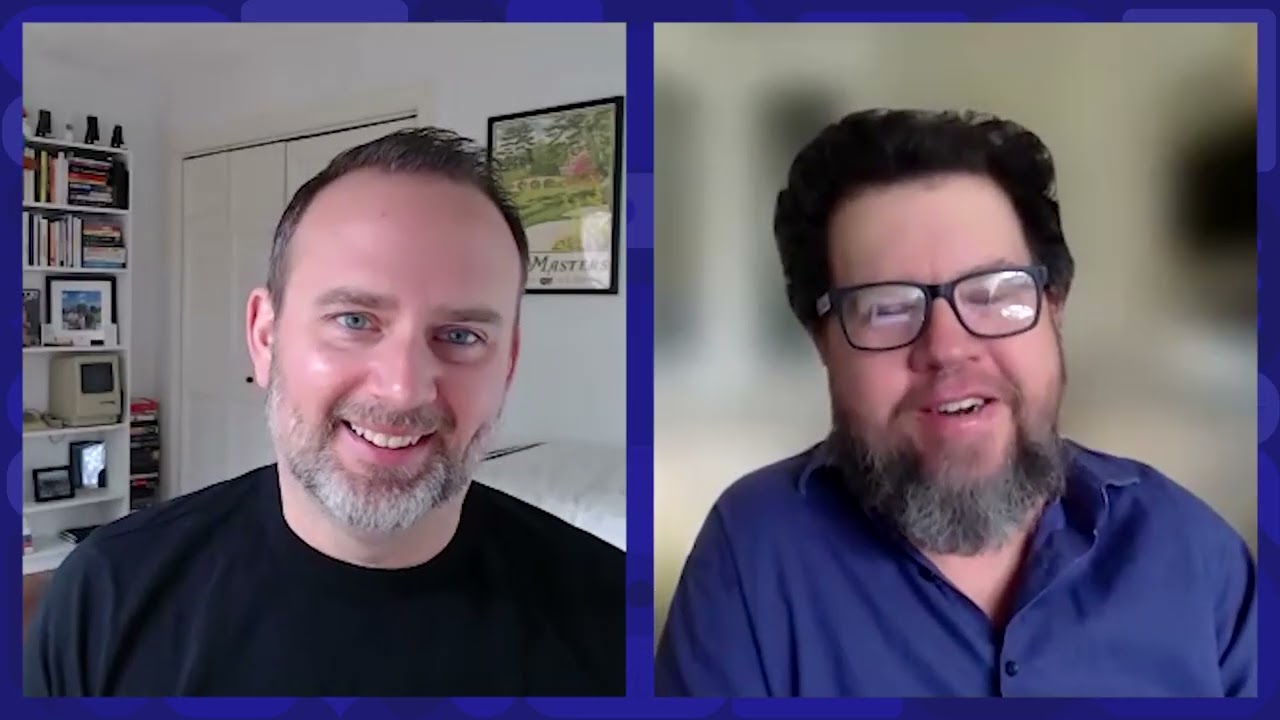
You can watch the video above or download/listen below.
Andrew Marcinek remembers the moment social media stopped feeling like a community. It was around 2015 and 2016, when he was finishing a stint at the U.S. Department of Education and coming back into schools. He was also headlining Tech & Learning events. I’ve been lucky enough to keep in touch with Andrew since then. He continues to keep a keen eye on this incredibly complicated and harrowing landscape.
His personal reckonings from that time became the foundation for his book Teaching Digital Kindness, and it's the lens through which he's watching the current wave of lawsuits against Meta and other social media companies. For Marcinek, these cases aren't a surprise — they're a long-overdue reckoning. The comparison to Big Tobacco, he argues, is apt: years of denial, a product engineered to be addictive, and mounting evidence of harm to the most vulnerable users.
The burden of dealing with that harm, he notes, has fallen almost entirely on schools — institutions that were themselves manipulated by the same algorithms and given no roadmap for what to do.
Marcinek's prescription isn't a phone ban or a screen purge. It's intentionality — building technology programs in schools with deliberate purpose, communicating transparently with parents about how and when devices are used, and treating the current AI moment as a second chance to get the foundational work right.
"Schools need to lean in and have conversations around AI," he says. "If you're not, you are doing your school community a disservice — sending kids out into the world without knowledge of probably one of the most powerful technologies in anyone's lifetime."
He points to employer signals as the clearest argument for AI literacy: companies, including Microsoft and Anthropic, are explicitly looking for workers who understand how to use AI alongside strong soft skills. Schools that treat AI primarily as a cheating threat, Marcinek contends, are asking the wrong question — and risking the same institutional failure that defined the social media era.
A second book, tentatively titled Untangled, is in progress — it focuses on how individuals and institutions can find their way out of the algorithmic knots of the last two decades. I’m looking forward to it.
