Watch above or download/listen below.
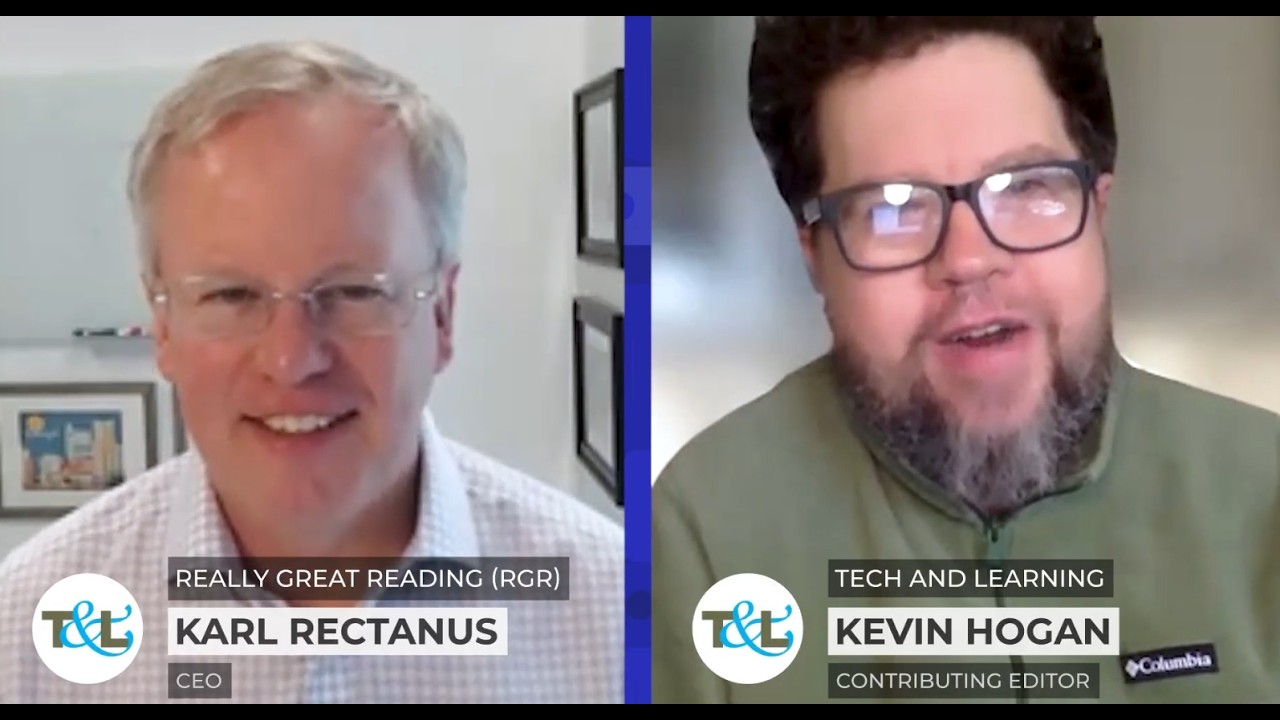
Karl Rectanus has a new mission: change the trajectory of U.S. literacy. The edtech veteran — best known for founding Learn Platform, the evidence and edtech management company — has taken the helm as CEO of Really Great Reading (RGR), one of the country's oldest and most established science of reading organizations.
I was lucky enough to catch Karl for a few minutes. He made it clear that his arrival at RGR is not simply a leadership transition — it's a strategic pivot toward accountability. "Two-thirds of our kids cannot read by the end of third grade," he says. "And they're not reading at grade level by the time they graduate."
RGR was doing science of reading before it became a buzzword, Rectanus notes, tracing its roots to Learning Without Tears around 2005–2006. The organization has evolved from print-first materials — letter blocks, syllable boards, classroom posters — into a full suite of digital tools, professional learning, and coaching. Now, under Rectanus, the organization is going further: positioning itself as the first literacy outcomes company in the space.
Central to that ambition is outcomes-based contracting, a model Rectanus says has never been applied to literacy at scale. Rather than selling books or apps and hoping for the best, RGR will tie its agreements to measurable student progress. "We will be holding ourselves accountable," he says, pointing to more than 5 million foundational skills learned by students using RGR tools in the current school year alone.
Rectanus cites Mississippi's dramatic rise in reading scores — from 49th to 18th nationally — as proof that the model works when implemented with fidelity. "It's not a miracle," he says. "It's a Southern surge. They focused on three things: aligned curriculum, a caring adult, and a feedback loop."
He also addresses the pending federal Read Act, cautioning that legislation alone won't move the needle. "Unless states and districts do something with whatever happens there, it will not mean anything," he says.
His prescription for tech directors and curriculum leaders: stop asking for content, start asking for outcomes.
